One gallery, two homes

Built to live inside OpenSea too

This site is the surface a collector shares. The same curation object (rooms, sizes, notes, panels, one market-data flag) is built to render inside opensea.io, so the Galleries tab on a collector profile becomes Seawall itself.

The original research examined the Galleries tab on OpenSea profiles. The mockups below propose an in-shell version: the tab as a wall in OpenSea’s own tokens, the room behind Enter gallery, and the item page that leads back into an exhibition.
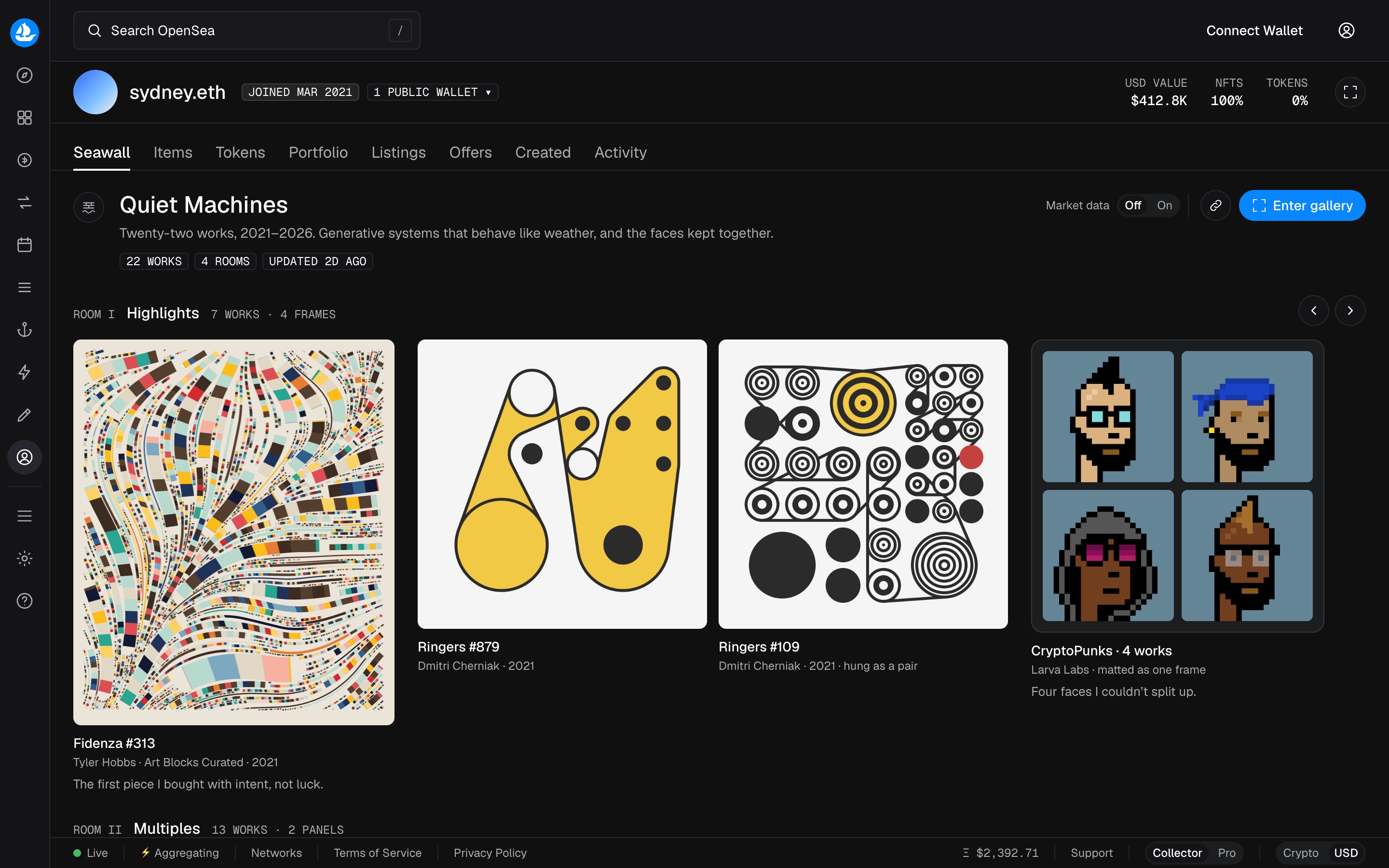
OpenSea collector profile with the Galleries tab replaced by Seawall: rooms of framed works with wall labels and notes, CryptoPunks and Meebits matted as single panels, market data off, and an Enter gallery button
Profile › Seawall. The Galleries tab becomes the wall: rooms with labels and collectors’ notes, multiples matted as one framed panel, market data off by default, and Enter gallery one press away.
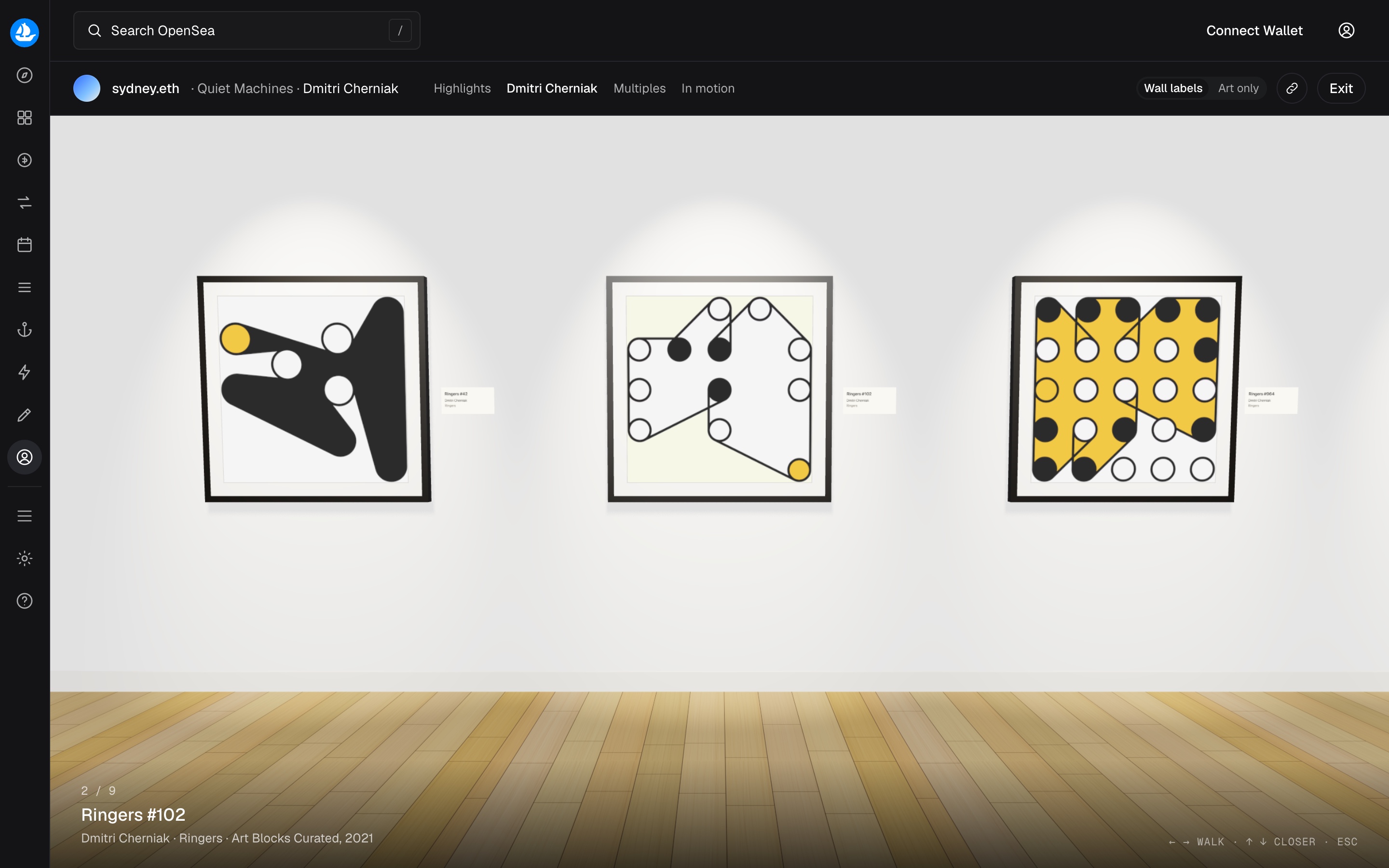
The Seawall room inside OpenSea: three framed Ringers under spotlights on a plaster wall with an oak floor, an OpenSea header strip naming the collector, exhibition and room, and a caption for the work in view
Enter gallery. The room itself, inside OpenSea’s frame: the render is the walk as shipped here, with the shell’s own header for the collector, the exhibition and its rooms.
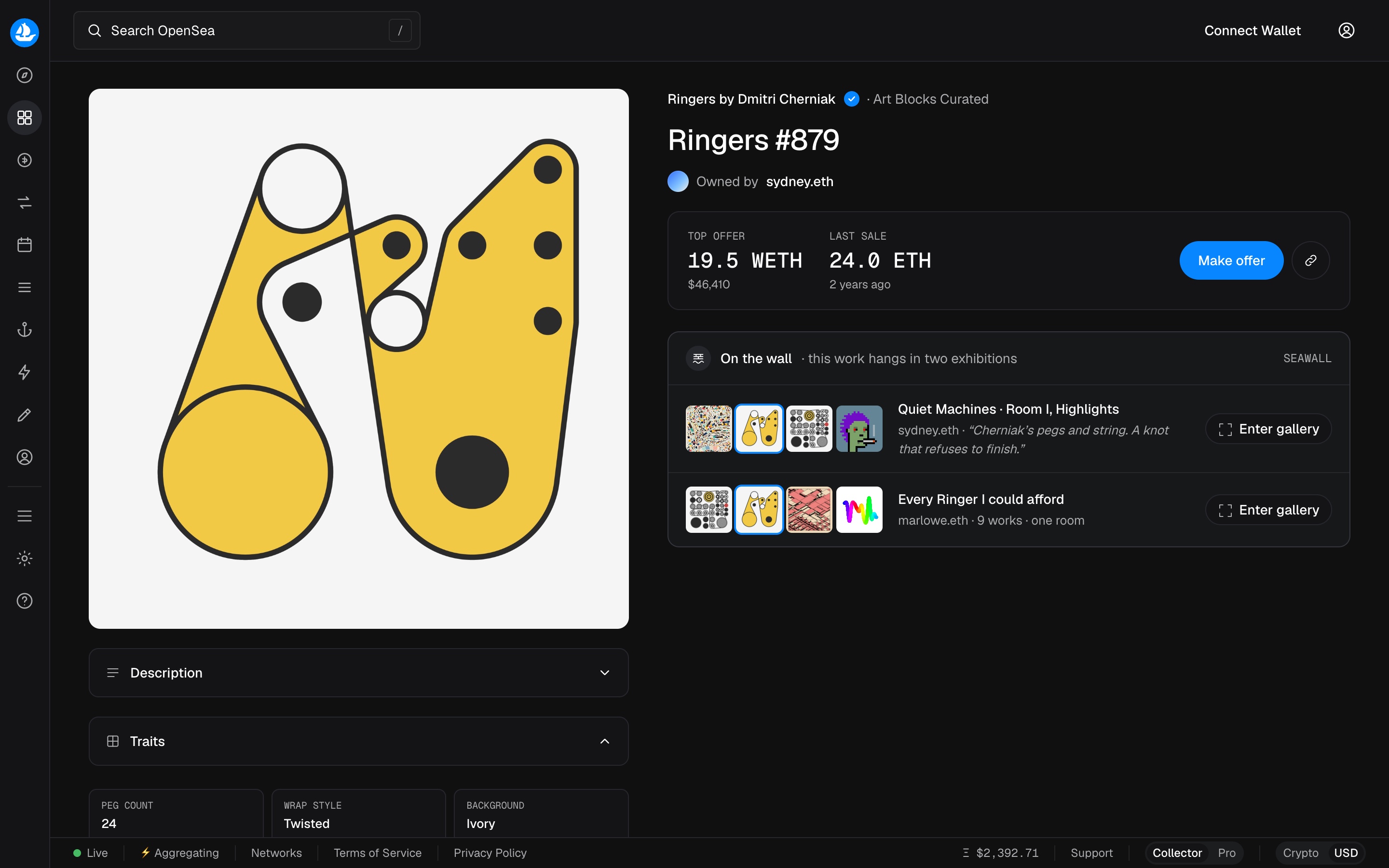
OpenSea item page for Ringers #879 with the market card above an On the wall module listing the two exhibitions the work hangs in, each with thumbnails and an Enter gallery button
The door back in. Item pages show where a work hangs: every exhibition that includes it, with the collector’s note and Enter gallery. Curation becomes a discovery signal without a single price leaving the market card.

The wall renderer takes wallet data plus a curation object and knows nothing about its host. Here it gets cream paper and a serif. Inside OS2 it inherits the shell’s tokens. One product, two skins.

Powered by OpenSea